
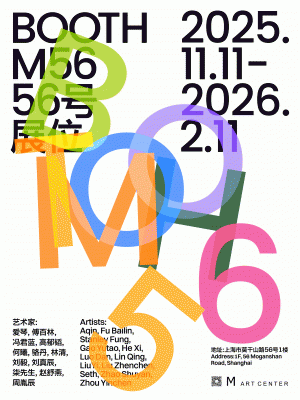
When the entire city steps into the art season, the art industry is operating at a familiar, high-speed rhythm—dense openings, frequent social engagements, and condensed art-viewing experiences. Amid this now-familiar hustle and bustle, M Art Center attempts to create a moment of "pause and reflection": at our main venue on 56 Moganshan Road, we present a special exhibition project—"Booth M56." As the name suggests, we have conceived and constructed the gallery itself as a complete "art fair booth." Art fairs, with their efficient pace and concentrated energy, form an indispensable part of the contemporary art landscape. They bring together creativity, spark dialogue, and provide invaluable opportunities for institutions and the public to connect. While we gladly participate in this art season, we also find ourselves contemplating: as a gallery with a permanent space in the local context, can we simultaneously offer an alternative rhythm—a "nearby" that allows the gaze to linger and encourages deeper conversation? Can we create a more unhurried "parallel site," where exchanges, within a familiar physical space, develop a different texture? "Booth M56" is precisely such an exploration. "M56" is not only our geographical anchor since 2007 but also the conceptual pivot of this project. We have invited twelve artists to place their works—diverse in style and medium—within this deliberately constructed "booth" context. Here, each piece maintains its independent expression while also serving as a component in building this "simulated booth" environment. By replicating the spatial atmosphere...
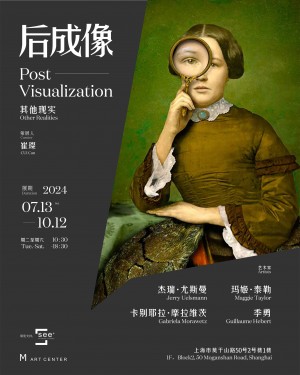
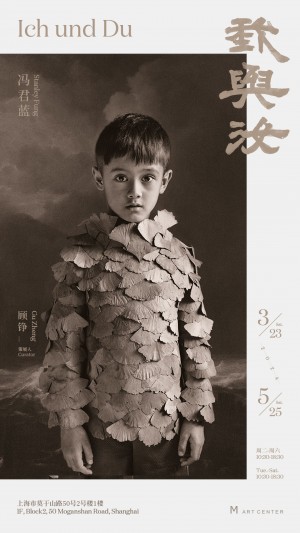
Contemplation and Encounter By Gu Zheng Viewing Stanley Fung's photography, it is impossible not to think of a series of statements by Martin Buber, a German philosopher of modern religion, in his classic book Ich und Du, which I studied early. However, when I reread it this time, I felt nothing necessary could be said about Fung's photography. Although Buber's discussion of the “I-Thou” relationship didn’t refer to photography with even one word, it seems to have fully understood the mystery of the “I-Thou” relationship embodied in Fung's portrait photography. Honestly, I am terrified of narrowing Buber's universal and inclusive “I-Thou” discourse by my understanding. Still, paradoxically, it applies so well to Fung's portrait photography practice, thus further proving the universality of Buber's philosophy. Photography, particularly portraiture, is a fundamental way to be acquainted with people. This approach is also a process of knowing, understanding, and comprehending between the photographer and sitter. Portrait photography is also an attempt to transform the object from the pure other into the integrity of “I” and “Thou”, which contain each other simultaneously. This process may fail when the photographer lets go of the ego and tries to accept the other entirely. Still, it is incredibly vital for those who love others by photography. As Buber said, “It is itself ready on every occasion to become Thou for them, and open up the world of Thou—no; it is not ready: it continually approaches and touches...
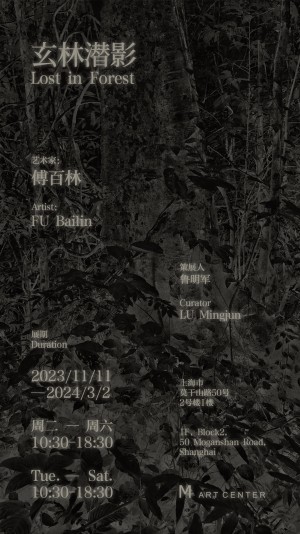
M Art Center is honored to announce that on November 11th, we will present the solo exhibition "Lost in Forest" by artist FU Bailin. Curated by LU Mingjun, this exhibition will showcase FU Bailin's distinctive visual style through a selection of his photos, installations, and video works. The dense jungle and the trees are right there, flourishing and declining, unaffected by human observation. They don't wait for our entry nor do they reject our steps. They remain forever mysterious and enchanting. "Lost in Forest" primarily features two series of works, "Tree" and "Latent Image", showcasing a unique forest, an object landscape that highlights subjective cognition. "Tree" incorporates ink into images, creating hand-dyed works that not only contain the rich details that photography can capture but also present the charm of painting. The installation work "Latent Image" refers to the 19th-century animation device "Kaiser Panorama," hinting at "tree holes," "viewfinders," and "slides," reorienting the mode of viewing back into the heart of the jungle. "Xuan" literally means black, which means mysterious in Chinese. The saying goes, "Profoundly mysterious(black), the gateway to all wonders." FU Bailin skillfully uses black to create a rich and mysterious visual experience, forming a tension between objective imagery and the absolute subjectivity of image processing. This tension is also evident in the act of viewing: subtle and immersive tones come forward, distinct from ordinary recognition or scrutiny. It's more like a whispering exchange between the viewer and...
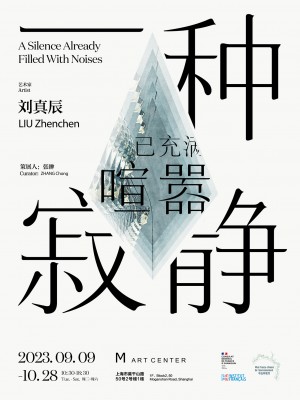
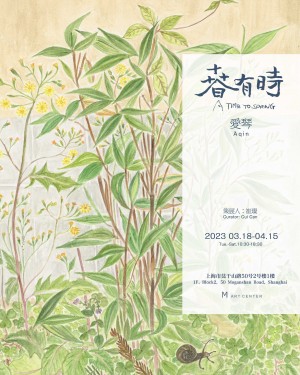
By/Cui Can Spring is mighty. It is fierce and cruel. It thrives and continues to rage, without stopping for anything or anyone. Aqin knows it. She believes her drawing is too slow to catch up with the pace of time. The flowers and fruits are withering as she paints. Her process is to outline what quickly fades first, leaving the enduring therafter, and finally painting the stems and leaf blades. And so, the flowers, branches, and leaves in one painting are drawn at different times, forming a sycnchronic presentation of duration evolution. Still lives of the 17th century also possesses this quality. For instance, the painter would combine flowers from different seasons together to present vividness with observations and memories. However Aqin cannot. Follow this process as she is very restrained in using watercolors, and there has no editing through portraying the areas. Her loyalty to details and textures determines the time required. She is very honest in her paintings: each petal and each corner of the tablecloth is scrupulous with no special treatment or special favors; just like what the spring breeze does when passing through the leaves. The word “Stilleven” is created by the Dutch in the 17th century. It consists of stil (still) and leven (life), two seemingly contradictory words in Dutch that build a crucial branch of painting. The keyword in the tradition of stilleven is "time": delicate bouquets, fresh fruits, and glass or ceramic containers....

M Art Center
1F, Building 2, 50 MoGanShan Rd.
Tel: +86 21 6299 6610
Email: martcenter@vip.163.com
Open in every Trusday to Saturday, from 10:30 to 18:30